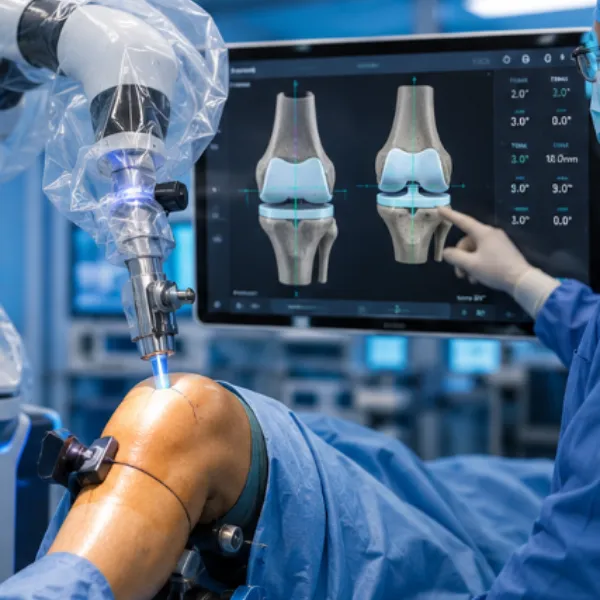
Robotic systems are increasingly discussed in relation to knee and hip replacement. The word “robotic” can create the mistaken impression that a machine independently performs the operation. In reality, Robotic Joint Replacement Surgery in Sanghvi remains a surgeon-led procedure in which technology assists with planning, measurement and component positioning.
Understanding what the system can and cannot do helps patients evaluate the option without being influenced by exaggerated claims.
The Surgeon Remains in Control
A robotic platform does not independently diagnose the condition, decide whether surgery is necessary or manage the patient’s recovery. The orthopaedic surgeon creates and executes the operative plan.
Depending on the system and procedure, robotic assistance may support:
- Three-dimensional surgical planning
- Assessment of bone anatomy
- Measurement of joint alignment
- Planning of implant size and position
- Controlled bone preparation
- Evaluation of ligament balance
- Verification of positioning during surgery
Different platforms work in different ways. Some require a preoperative CT scan, while others create a model using information collected during the operation.
How It Differs From Conventional Replacement
In conventional joint replacement, the surgeon uses established instruments and anatomical landmarks to prepare the joint and position the components. Robotic-assisted surgery adds digital planning and intraoperative guidance.
Both methods can be used successfully. Robotic assistance is a tool, not a separate treatment for arthritis. The basic objective remains the same: remove damaged joint surfaces, place suitable components and restore useful joint function.
The relevant comparison is therefore not “human surgeon versus robot.” It is surgeon-led conventional instrumentation versus surgeon-led surgery with robotic planning and guidance.
Potential Advantages
For an appropriately selected patient, robotic assistance may help the surgical team plan component placement according to individual anatomy. It can also provide real-time measurements that support alignment and soft-tissue balancing decisions.
Potential benefits discussed during consultation may include:
- Detailed patient-specific planning
- Precise bone-cut guidance
- Intraoperative verification
- Ability to make measured adjustments
- Consistent execution of the chosen plan
However, technical precision does not guarantee a particular pain score, recovery time or implant lifespan. Outcomes are also influenced by diagnosis, surgeon experience, infection prevention, medical health and rehabilitation.
Questions Patients Should Ask
When evaluating robotic surgery, patients should look beyond the presence of a machine. Important questions include:
- Am I medically and clinically suitable for joint replacement?
- Why is robotic assistance recommended in my case?
- Does the surgeon regularly use this particular system?
- Will additional imaging be required?
- What are the alternatives?
- Are the surgical risks different?
- What costs relate specifically to robotic assistance?
- What recovery plan will follow the operation?
The American Academy of Orthopaedic Surgeons advises patients to discuss both the advantages and disadvantages of robotic-assisted replacement with their surgeon as part of broader joint-replacement decision-making.
Technology Does Not Replace Patient Selection
The most sophisticated equipment cannot make an unnecessary operation appropriate. Before recommending replacement, the surgeon must confirm the source of pain, the severity of joint damage and the effect on everyday function.
Medical conditions such as uncontrolled diabetes, active infection or significant cardiovascular risk may require treatment or optimisation before elective surgery. Patients must also be prepared for physiotherapy and progressive activity after the procedure.
Evaluating the Option in Sanghvi
People searching in Sanghvi, Pune, should compare clinical evaluation, surgeon experience, hospital systems and rehabilitation planning not technology alone. The availability of robotics is useful only when it contributes meaningfully to a carefully selected procedure.
Dr Amit Laturkar Orthopedic Aundh assesses patients with advanced knee and hip conditions and can explain whether conventional or robotic-assisted surgery is appropriate. A responsible recommendation should make the role of the technology clear while keeping the patient’s diagnosis, safety and recovery goals at the centre of the plan.
Keywords