The right procedure depends on the damaged tissue, the way your joint behaves, and whether the scan matches your examination—not simply on whether an MRI shows a tear. By comparing the main knee and shoulder operations, you can prepare better questions about repair, tissue removal, rehabilitation, and non-surgical alternatives.
Key takeaways
- A locked knee needs prompt assessment; painless clicking alone rarely justifies arthroscopy.
- Match knee surgery to the meniscus, ligament, cartilage, or joint problem involved.
- Separate shoulder pain, weakness, and instability before considering arthroscopic treatment.
- Ask about nonsurgical options, expected recovery, and the specific function surgery should restore.
Start with the injury pattern, not the MRI label
A locked knee or inability to fully straighten it needs different attention from painless, occasional clicking. A displaced bucket-handle meniscal fragment can block motion and warrants prompt orthopedic assessment; clicking alone is not a reliable reason for arthroscopy.
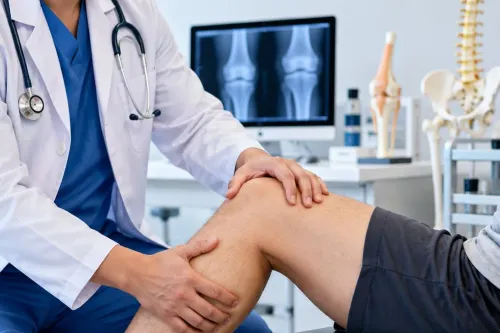
Examination checks knee locking, loss of extension, joint-line tenderness, ligament laxity, shoulder weakness, range of motion, apprehension after dislocation, and recurrent giving-way.
| Test | What it shows | What it does not reliably show |
|---|---|---|
| X-ray | Fracture, alignment, joint-space loss, arthritis, bone spurs, some bone loss | Most meniscus, ligament, labral, or rotator-cuff tears |
| MRI | Soft-tissue damage, tear location, retraction, cartilage loss, bone bruising, associated injuries | Whether an abnormality is causing your symptoms |
| Physical examination | Painful movements, weakness, instability, blocked motion, and signs that match the injury | The full size or depth of internal tissue damage |
The scan must match your symptoms. An incidental meniscal or labral abnormality does not prove it causes pain. Before choosing surgery, review the injury mechanism, symptom duration, activity goals, quality and duration of physiotherapy, and failed non-operative treatment.
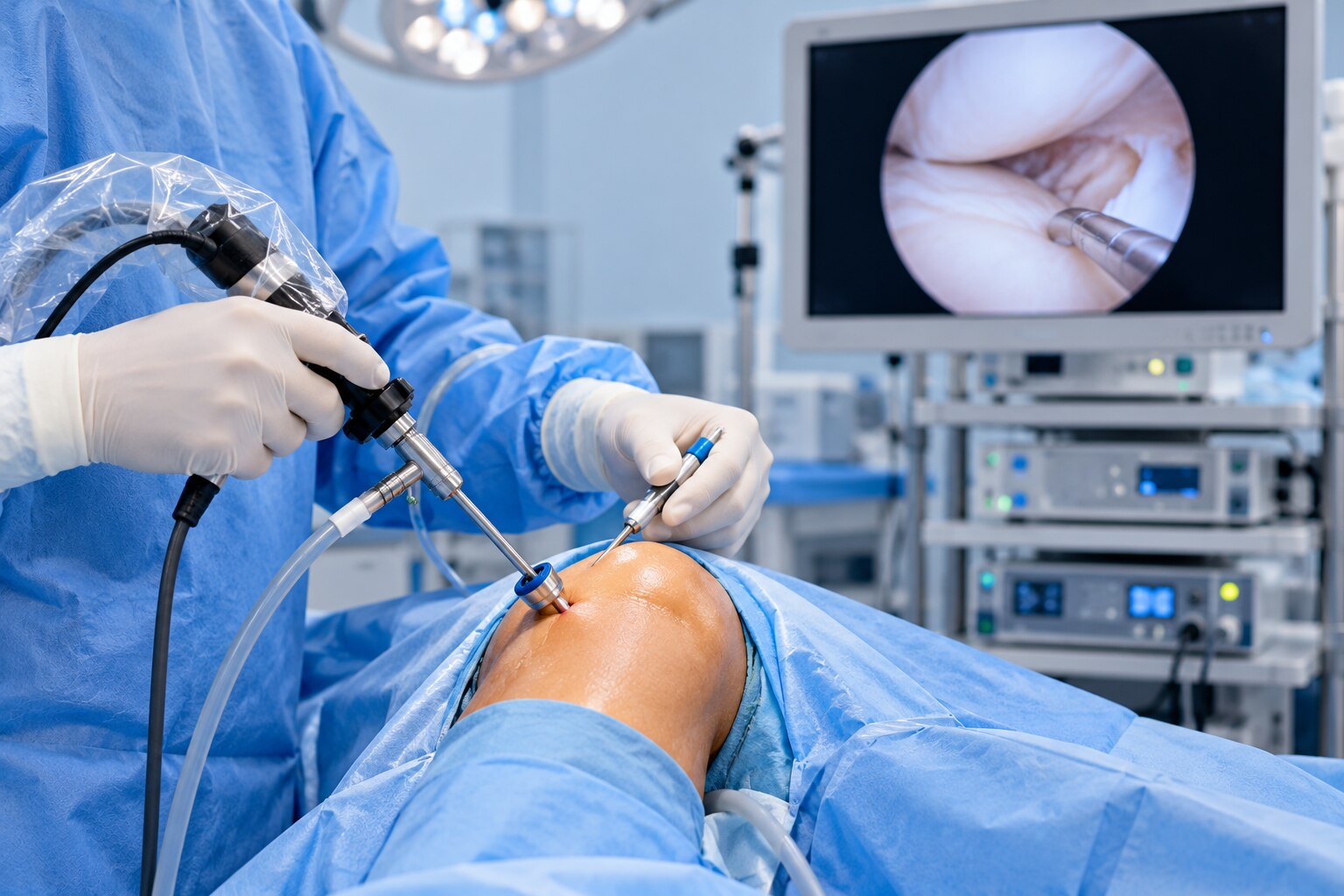
Diagnostic arthroscopy is not automatically useful when examination and MRI already identify the pain source; it becomes less attractive when it would only inspect tissue without a planned treatment. The operation should answer a specific problem, not merely confirm an MRI label.
Match the knee procedure to the damaged structure
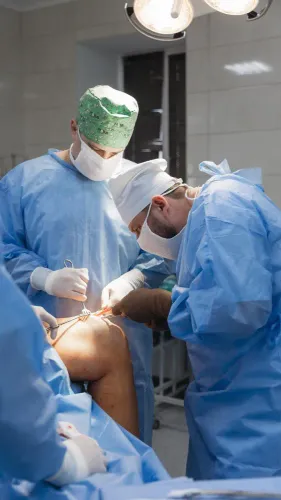
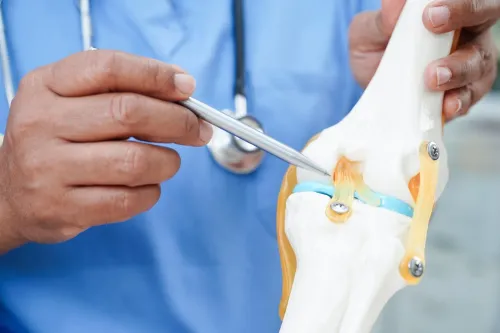
The damaged structure and the symptom pattern should determine the knee procedure, not the MRI label alone. Use this side-by-side guide to match the finding with the likely purpose and trade-off.
| Option | What it does | When it fits |
|---|---|---|
| Diagnostic arthroscopy | Inspects the joint | A genuine unresolved question remains after examination and imaging; it is not a substitute for correlating a known MRI finding with symptoms |
| Meniscus repair | Rejoins and preserves the shock-absorbing meniscus | A traumatic, repairable tear has stable tissue and enough blood supply to heal; expect longer protection and rehabilitation |
| Partial meniscectomy | Trims unstable meniscal tissue | A fragment cannot be repaired or keeps catching; loading progresses sooner, but tissue is permanently removed |
| ACL reconstruction | Replaces the torn ligament | Recurrent giving-way, pivoting-sport demands, combined injuries, or persistent instability make rehabilitation alone insufficient |
| Cartilage procedure | Smooths unstable cartilage or treats a focal defect | A selected focal cartilage problem exists; it is not a general treatment for diffuse arthritis |
| Loose-body removal | Removes a mobile fragment | Locking, catching, swelling, or blocked motion comes from a loose body |
Selected people with ACL injury can try structured rehabilitation before reconstruction. Rehabilitation remains necessary after reconstruction.
For knee osteoarthritis or degenerative meniscal symptoms, begin with exercise therapy, weight management when relevant, pain relief, and other non-operative care. Arthroscopy does not correct underlying arthritis. Search for a knee arthroscopy surgeon in Pune as a starting point, not as proof that surgery is needed.
Separate shoulder pain, weakness and instability before choosing surgery
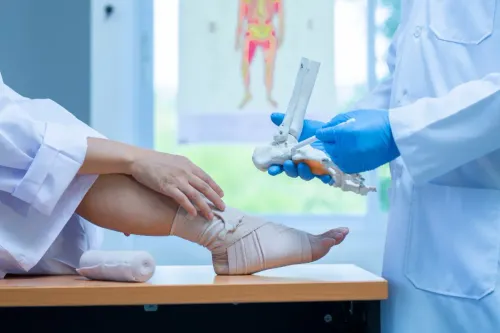
Pain, weakness and instability point to different shoulder problems, so the MRI label alone cannot choose the operation. A repairable rotator-cuff tear causing marked weakness or lost function, particularly after an acute injury, deserves earlier surgical assessment; tear size, retraction, muscle quality, age, activity demands and rehabilitation response also matter.
| Option | Injury pattern | Key decision |
|---|---|---|
| Rotator-cuff repair | Tear with weakness or loss of function | Compare repairability with rehabilitation, considering retraction, muscle quality, age and activity |
| Bankart or labral repair | Torn front-lower labrum and capsule after traumatic dislocation | Recurrent instability, Hill-Sachs damage, glenoid bone loss, contact sport or laxity can require bone-block stabilisation instead |
| SLAP treatment | Superior labral tear with symptoms or biceps involvement | Choose among repair, debridement or a biceps procedure; age and tear pattern matter |
| Subacromial decompression or acromioplasty | Subacromial pain or an acromial spur | Do not select it from an MRI label alone; discuss the suspected pain source because benefit is small for many patients |
| Loose-body removal | Mobile fragment causing catching or blocked movement | Fits a mechanical obstruction, not unexplained shoulder pain |
| Debridement or capsular release | Selected damaged tissue or stiffness | Restrictions differ from cuff and instability repair |
A shoulder tear can improve with structured rehabilitation. Repeated dislocation, substantial weakness, or giving-way changes the urgency and the stabilisation plan. Ask a shoulder arthroscopy surgeon in Pune to explain why the proposed procedure matches your examination, imaging and goals, and what sling, driving, work and physiotherapy restrictions follow.
Know when arthroscopy is the wrong choice and what recovery it creates
Advanced knee osteoarthritis with widespread cartilage loss is better assessed for joint-replacement options than treated with lavage or debridement. An irreparable or severely retracted rotator-cuff tear may need rehabilitation or another reconstruction strategy, not a standard repair. Infection needs urgent medical treatment, and a fracture requiring fixation is not solved by routine arthroscopy.
Do not operate on an MRI finding that does not reproduce your symptoms or examination signs. Smaller incisions do not remove surgical risks: infection, bleeding, blood clots, nerve or blood-vessel injury, stiffness, anaesthesia complications, persistent pain, failed healing, or recurrent instability.
| Option | When it fits | Recovery implication |
|---|---|---|
| Simple inspection or debridement | An unresolved diagnosis or unstable tissue that can be treated without repair | Activity often advances sooner |
| Meniscus repair | A repairable traumatic tear with viable tissue and healing potential | Longer protected motion or weight-bearing; physiotherapy is essential |
| Partial meniscectomy | An irreparable fragment that catches or remains unstable | Loading may progress sooner, but meniscal tissue is permanently removed |
| ACL reconstruction | Recurrent giving-way, pivoting-sport demands, or combined injury | Weeks to months of staged rehabilitation |
| Cuff or instability repair | Repairable tear, traumatic weakness, or recurrent shoulder dislocation | Sling use, restricted lifting, and prolonged physiotherapy |
Recovery follows the procedure, not the word arthroscopy. Ask for written milestones for walking, lifting, driving, desk work, manual work, swimming, and sport. Repair preserves tissue but protects it longer; trimming may load sooner but cannot repair every tear.
Turn a local surgeon search into a useful consultation
Treat “arthroscopy options Aundh” and “arthroscopy specialist Sanghvi” as starting points, not evidence that surgery suits you. Use the consultation to test the diagnosis and compare alternatives.
| Question to ask | What a useful answer identifies |
|---|---|
| Which tissue causes the symptoms? | Meniscus, ligament, cartilage, labrum, rotator cuff, or another structure |
| Which examination finding supports it? | Locking, weakness, tenderness, laxity, restricted motion, or instability |
| What do the X-ray and MRI add? | X-ray findings such as arthritis or bone loss, and MRI evidence of soft-tissue damage |
| What if I choose rehabilitation? | Expected improvement, timeframe, activities allowed, and when surgery would be reconsidered |
Request the proposed procedure’s exact name and ask why repair is preferable to removal, or why neither is suitable. Also ask for:
- Non-operative alternatives and the anaesthesia plan
- Expected hospital stay, weight-bearing or sling restrictions, driving and work limits
- Physiotherapy start date, visit frequency, and milestone schedule
- Warning signs requiring urgent review, such as fever, worsening wound redness, severe calf swelling, chest pain, or sudden weakness
Check the doctor’s registration in the National Medical Commission’s Indian Medical Register. Ask about training and experience with your specific operation, not only a total arthroscopy count. Confirm who conducts follow-up, coordinates physiotherapy, manages complications, and supports a second opinion.
Dr Amit Laturkar Orthopedic in Aundh | 08048035468, at The Advanced Orthocare Clinic near Parihar Chowk, Aundh Gaon, can be one comparison point; judge the recommendation by diagnosis, alternatives, rehabilitation, and your questions—not location.
Related service
Arthroscopy for Knee and Shoulder Surgeon in Pune Arthroscopy for Knee and Shoulder (700+ surgeries) Dr. Amit Mohan Laturkar is the Best Arthroscopy for Knee and Shoulder Surgeon in Pune. Dr. View service → |
Frequently asked questions
Which knee or shoulder arthroscopy option is right for me?
Start with the injury pattern and examination, then match treatment to the damaged structure. A locked knee, torn meniscus, ligament injury, cartilage defect, shoulder weakness, and instability require different decisions.
When does a knee injury need prompt arthroscopy assessment?
A locked knee or inability to fully straighten it needs prompt orthopedic assessment, especially when a displaced bucket-handle meniscal fragment blocks motion. Clicking without pain or loss of function is not a reliable reason for arthroscopy.
How do surgeons distinguish shoulder pain, weakness, and instability?
Pain with overhead movement points to a different problem than loss of strength or repeated slipping. The examination, injury history, and imaging help identify whether the issue involves tendons, the labrum, or joint stability.
When is arthroscopy the wrong choice?
Arthroscopy is not the best option for every MRI finding or episode of pain. Discuss physiotherapy, activity changes, medication, injections, or other treatment when symptoms do not match a repairable structural problem, and ask what recovery the proposed procedure creates.
Keywords