Knee pain can gradually change the way a person walks, works, sleeps and manages everyday activities. Some people begin avoiding stairs, shortening outdoor trips or depending on support because the joint feels painful or unstable. When medication, physiotherapy and other non-surgical measures no longer provide adequate relief, consulting a Knee Arthroplasty Surgeon in Pune may help determine whether joint replacement is appropriate.
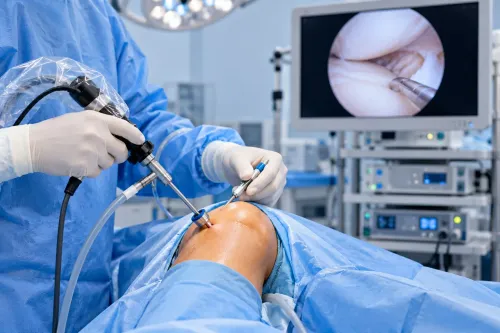
Knee arthroplasty, commonly called knee replacement, involves removing damaged joint surfaces and replacing them with artificial components. It is generally considered for significant joint damage rather than occasional knee discomfort.
Conditions That May Lead to Knee Replacement
Osteoarthritis is one of the most common reasons for knee arthroplasty. The protective cartilage inside the joint gradually wears down, causing pain, stiffness and restricted movement.
Surgery may also be evaluated in people affected by:
- Rheumatoid arthritis
- Post-traumatic arthritis following an old injury
- Significant bow-leg or knock-knee deformity
- Osteonecrosis affecting the knee
- Severe joint damage after a fracture
- Persistent pain despite structured conservative treatment
An X-ray may show the extent and distribution of joint damage, but the image alone does not determine whether surgery is necessary. The surgeon also evaluates symptoms, mobility, health status and the effect of pain on daily life.
Signs That an Assessment May Be Helpful
Persistent discomfort does not automatically mean a person needs knee replacement. However, further evaluation is reasonable when knee problems consistently interfere with function.
Relevant signs may include:
- Pain while walking short distances
- Difficulty climbing stairs or getting out of a chair
- Pain at rest or during the night
- Increasing stiffness
- Visible change in leg alignment
- Recurrent swelling
- Reduced independence
- Limited improvement after physiotherapy or medication
These difficulties should be considered together rather than treating one symptom as conclusive.
Is Every Patient Given a Total Knee Replacement?
No. The appropriate procedure depends on which parts of the joint are damaged.
A total knee replacement may be considered when arthritis affects several compartments of the knee. Partial knee replacement may be suitable for selected patients whose damage is limited to one compartment and whose ligaments meet the required criteria.
Age is not the only deciding factor. A surgeon evaluates the person’s symptoms, bone quality, medical fitness, activity expectations and willingness to participate in rehabilitation.
What Happens During the Consultation?
A knee assessment usually begins with a detailed discussion about pain, previous injuries, existing illnesses and treatments already attempted. The surgeon may examine joint movement, tenderness, stability, walking pattern and limb alignment.
Patients should bring previous X-rays, MRI reports, medical records and a current medication list. Updated standing X-rays may be requested to evaluate joint-space loss and alignment under weight-bearing conditions.
If surgery is being considered, the discussion should cover:
- Whether non-surgical options remain appropriate
- Partial versus total replacement suitability
- Implant and surgical planning
- Anaesthesia
- Expected hospital stay
- Pain management
- Rehabilitation
- Potential risks
- Realistic recovery goals
Knee replacement can relieve pain and improve function, but recovery requires active participation. Exercise, progressive walking and physiotherapy are important parts of regaining strength and movement after the procedure, as explained in patient guidance from the American Academy of Orthopaedic Surgeons.
Making a Patient-Specific Decision
Patients in Pune may encounter different claims about implants, minimally invasive techniques and recovery speed. The most suitable plan cannot be selected from an advertisement alone. It should be based on clinical findings, imaging, overall health and personal goals.
Dr Amit Laturkar Orthopedic Aundh provides evaluation for people experiencing knee arthritis and related mobility limitations. A consultation can clarify the cause of symptoms, identify reasonable non-operative measures and establish whether arthroplasty should be considered.
The purpose of assessment is not to move every patient toward surgery. It is to find the treatment proportionate to the joint damage and the patient’s actual functional needs.
Keywords