A home splint can reduce movement while you arrange care, but it cannot show whether a bone is broken, aligned or safe to leave untreated. Use the warning signs and first-aid steps below to decide when to call emergency services, when to seek same-day assessment, and what fracture-capable care should provide.
Key takeaways
- Seek urgent care for exposed bone, uncontrolled bleeding, severe deformity, or failed circulation.
- Keep the injured limb still and support it in the position found.
- Do not push a dislocated joint or broken bone back into place.
- Fracture care may include imaging, reduction, casting, or surgery.
When home splinting is unsafe after an Aundh injury
Do not manage a suspected fracture at home when the limb has an open wound, visible bone, uncontrolled bleeding, severe deformity, or signs that blood flow or nerve function is failing. These findings require urgent trauma assessment, not a routine appointment.
Seek emergency care immediately for:
- An absent or weak pulse below the injury
- Blue, pale, cold, or rapidly discoloured fingers or toes
- Numbness, paralysis, or inability to move the fingers or toes
- Rapidly increasing swelling or pain that becomes severe after immobilisation
- Bone protruding through the skin or a wound directly over the suspected fracture
| Finding | Why home splinting is unsafe | Appropriate response |
|---|---|---|
| Open wound or visible bone | Contamination and infection risk require wound management and stabilisation | Cover with a clean dressing; seek urgent trauma care |
| Absent pulse, cold digits, or numbness | The injury may be compressing blood vessels or nerves | Treat as an emergency; do not straighten the limb |
| Severe deformity | A displaced fracture or dislocation may need reduction | Support it in the position found and obtain urgent assessment |
| Rapid swelling or escalating pain | This can signal threatened circulation or compartment syndrome | Do not wait for a routine fracture consultation |
The choice between trauma fracture treatment or home splinting after an injury in Aundh depends on alignment, stability, joint involvement, skin condition, and neurovascular findings—not pain tolerance. A temporary splint can reduce pain while a displaced fracture still needs imaging, reduction, casting, or surgery. Never force a deformed limb straight.
How to protect a suspected fracture before you reach care
Keep the limb still and support it in the position you found it. Do not straighten a bent limb, push exposed bone back under the skin, or test whether it can move.
- Remove rings, watches, bracelets and tight clothing before swelling increases.
- Cover an open wound with a clean dressing. Apply gentle pressure around, not directly over, any visible bone.
- Place wrapped ice beside the injury for 15–20 minutes at a time. Never put ice directly on skin.
- Raise the limb when practical, but do not move it into a more comfortable position if that increases pain.
- If transport is delayed and the injury is stable, place a padded rigid support along the limb without forcing alignment. Immobilise the joint above and the joint below the suspected fracture.
- Check the fingers or toes before and after splinting: note colour, warmth, sensation and movement. Loosen the support if numbness, blue or pale skin, coldness, worsening pain or increased swelling develops.
- Avoid food and drink if a procedure or surgery may be needed; follow the transport service’s instructions instead.
Use emergency transport for uncontrolled bleeding, rapidly increasing swelling, severe pain after immobilisation, absent or weak pulse, numbness, paralysis, blue or cold fingers or toes, an open fracture, or severe deformity. A home splint only limits movement while you reach assessment; it does not confirm alignment or replace imaging and fracture treatment.
How clinicians tell a fracture from a sprain or dislocation
Pain and appearance cannot reliably identify a fracture. Clinicians assess the injury mechanism, tenderness, swelling, deformity, skin condition, and abnormal joint movement, then compare circulation, sensation, and motor function below the injury. They check the pulse, skin colour, temperature, capillary refill, numbness, and finger or toe movement.
The decision behind “fracture treatment versus splinting aundh” depends on findings, not pain tolerance. A clinician will usually:
- Obtain radiographs in at least two views, including the joint above or below when needed.
- Look for a fracture line, displacement, angulation, joint-surface involvement, dislocation, and instability.
- Decide whether temporary immobilisation is enough or whether reduction, casting, bracing, or fixation is required.
- Recheck and document pulse, sensation, and movement after immobilisation.
A normal-looking limb does not rule out a break. Scaphoid fractures illustrate the problem: pain in the anatomical snuffbox after a wrist injury can continue despite normal initial X-rays. The wrist may need immobilisation, repeat imaging, or MRI or CT based on the examination.
Some fractures are subtle or initially invisible on plain radiographs. A comfortable splint proves only that movement is restricted; it does not prove alignment or healing. Seek prompt review if pain rises, fingers or toes become numb, pale, blue, or cold, or swelling increases.
What definitive fracture treatment may involve after the splint
After temporary immobilisation, clinicians use examination and imaging to decide whether the bone is aligned, stable and away from a joint surface. A comfortable splint only limits movement and cushions swelling; it cannot correct displacement or show whether the fracture is healing.
Definitive treatment may include:
- Reduction: gentle manipulation realigns displaced bone. Do not attempt this yourself, especially with visible deformity.
- Casting or a fitted brace: these maintain alignment while the fracture heals. The joints above and below the injury may need support.
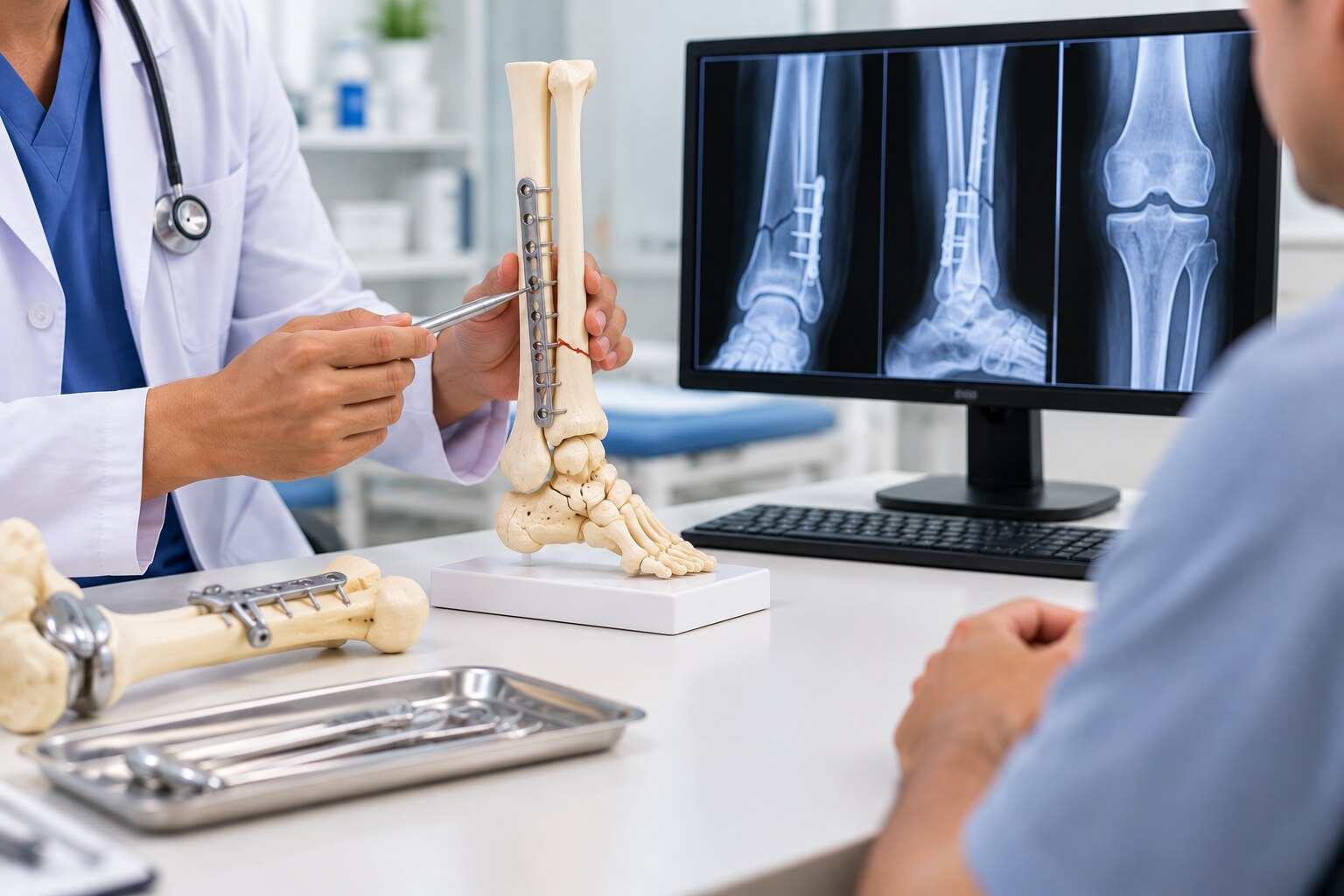
- Surgery: plates, screws, rods or pins may be needed for an unstable, badly displaced, open or joint-involving fracture.
- Follow-up imaging: repeat X-rays can detect movement after swelling decreases. Persistent wrist pain in the anatomical snuffbox can indicate a scaphoid fracture even when the first X-ray looks normal; repeat imaging, MRI or CT may be required.
Treatment depends on displacement, stability, joint involvement, skin condition, age and pulse, sensation and movement—not pain tolerance. A fracture can remain poorly aligned while feeling better in a splint.
Keep a cast dry, avoid inserting objects underneath it, and seek review for increasing pain, swelling, numbness, colour change, foul odour, drainage, cracking or softening. Obtain copies of your X-rays, reports and treatment notes if follow-up will occur at another clinic.
How to choose fracture-capable care near Sanghvi and Aundh
A nearby address is useful only if the service can complete the next clinical step. A fracture doctor near sanghvi should offer or promptly arrange radiographs, record pulse, skin colour, sensation and movement, and provide immobilisation suited to the injury rather than handing you a prefabricated splint.
| Option | Verify before choosing | Why it matters |
|---|---|---|
| Local orthopaedic clinic | X-ray access, documented neurovascular checks, casting, reduction, and a clear referral pathway | A displaced fracture may need realignment, not just support |
| Trauma care clinic aundh | Immediate assessment for open wounds, severe deformity, weak pulse, numbness, paralysis, or escalating swelling | These findings require urgent escalation, not a routine appointment |
| Hospital emergency department | Orthopaedic, anaesthesia, operating-room and advanced imaging access | Choose this first for visible bone, uncontrolled bleeding, a cold or blue limb, or suspected compartment syndrome |
| Follow-up provider | Repeat examination, repeat radiographs when needed, and access to the original records | Alignment can change after swelling falls, even when the splint feels comfortable |
Ask who will review the injury after two to seven days, which imaging you will receive, and where you should go if pain or swelling increases. Keep the radiology images, reports, treatment notes and discharge instructions if you begin bone injury treatment in Pune at one facility and continue elsewhere.
Dr Amit Laturkar Orthopedic in Aundh | 08048035468 is one local option to assess against these practical checks. For severe warning signs, bypass a routine fracture doctor near sanghvi and seek emergency trauma care.
Related service
Trauma & Fracture Care in Aundh Trauma & Fracture Treatment in Aundh, Sanghvi, Pune Dr. Amit Mohan Laturkar is the Best Trauma & Fracture Treatment Doctor in Aundh, Sanghvi and Pune. View service → |
Frequently asked questions
When is home splinting unsafe after an Aundh injury?
Home splinting is unsafe when the limb has an open wound, visible bone, uncontrolled bleeding, severe deformity, or signs of failing blood flow or nerve function. Seek urgent trauma assessment.
How should you protect a suspected fracture before reaching care?
Keep the limb still, support it in its existing position, cover open wounds with a clean dressing, and remove rings or watches before swelling increases. Do not straighten the limb or push a bone back into place.
How do clinicians distinguish a fracture from a sprain or dislocation?
Clinicians examine pain, swelling, deformity, movement, circulation, and nerve function, then use X-rays when a fracture or dislocation is suspected. Some injuries require additional imaging.
What can definitive fracture treatment involve after splinting?
Treatment can involve a cast or brace for a stable injury, reduction to realign displaced bones, or surgery using plates, screws, rods, or pins when alignment or stability requires it.
How do you choose fracture-capable care near Sanghvi and Aundh?
Choose a facility that can perform a prompt examination, arrange fracture imaging, assess circulation and nerves, provide temporary immobilisation, and refer or treat injuries requiring reduction or surgery.
Keywords