
A sore muscle after a long match is not managed the same way as a knee that locks, an ankle that will not bear weight, or a shoulder that looks out of place. You will be able to sort symptoms into relative-rest, prompt-assessment and emergency-care situations, then choose safe next steps for returning to cricket.
Key takeaways
- Use relative rest for mild strains; avoid bed rest and prolonged immobilisation.
- Protect the injury for 24 to 48 hours, then start gentle pain-limited movement.
- Seek assessment for severe pain, deformity, instability, numbness, or inability to bear weight.
- Return to cricket only after strength, movement, and sport-specific drills are pain-free.
Rest or treatment: what does your cricket injury suggest?
A straightforward mild strain or sprain usually calls for relative rest, not bed rest or an immediate scan. Stop cricket, protect the area, and resume gentle, pain-limited movement as symptoms settle; prolonged immobilisation can cause stiffness, weakness and slower function.
Sports injury treatment versus rest depends on pain, swelling, strength, movement and whether you can use the limb normally.
| Situation | What it suggests | Best next step |
|---|---|---|
| Mild soreness after exertion, normal walking, no swelling | Muscle fatigue or minor irritation | Rest from cricket, gentle movement and monitor for 24–48 hours |
| Pain with walking, running, gripping or bowling, or symptoms not improving | Strain, sprain or tendon injury needing examination | Arrange assessment with a sports-medicine doctor, orthopaedic clinician or physiotherapist |
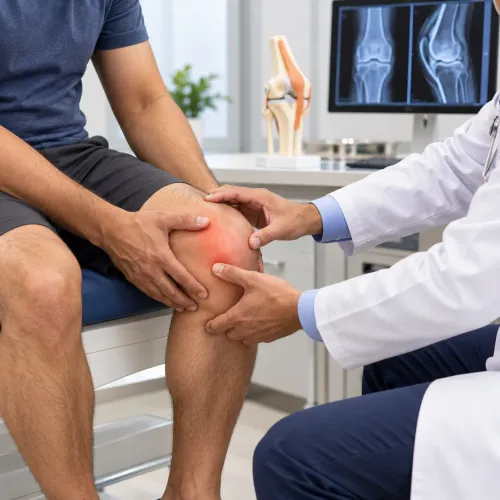
| Knee gives way, locks, cannot fully straighten, or swells rapidly | Possible major ligament, meniscus or internal joint injury | Seek prompt assessment rather than testing it in play |
| Deformity, suspected fracture, numbness, cold or pale limb, or inability to take four steps | Possible fracture, dislocation or circulation problem | Obtain same-day emergency care |
Searches for sports injury treatment or rest after a cricket injury in aundh should lead to an assessment when function is clearly reduced, not simply a scan or injection. A useful clinician examines gait, joint stability and strength, then sets staged loading and return-to-play criteria.
Do not return because pain briefly disappears after a painkiller; cricket demands sprinting, jumping, throwing and rapid direction changes.
The first 24 to 48 hours: protect the injury without over-resting
Stop playing as soon as pain changes your movement, strength, or balance. Protect the area during the first 24 to 48 hours, but do not stay completely still if you have a straightforward strain or sprain. Gentle, pain-limited movement helps prevent stiffness; sharp pain, increasing swelling, or instability means you are doing too much.
Use this plan:
- Rest from cricket, sprinting, jumping, bowling, and contact. Walk only as far as you can without a limp; use support if necessary.
- Apply an ice pack wrapped in a cloth for 15 to 20 minutes at a time, repeating every two to three hours while awake. Never place ice directly on skin.
- Elevate an ankle, knee, or hand above heart level when swelling is present. Use a comfortable compression bandage only if it does not cause numbness, tingling, colour change, or worsening pain.
- Avoid massage, hot baths, heating pads, alcohol, and hard stretching during fresh swelling.
- Do not use pain relief as proof that you are ready to return. Recheck movement and swelling the next day, and arrange assessment if symptoms are not clearly improving.
Seek urgent assessment for an obvious deformity, inability to take four steps, a locked joint, rapidly increasing swelling, numbness, a cold or pale limb, or severe disproportionate pain. Remove any player with suspected concussion immediately; they must not return that day.
A symptom-based triage guide for cricket injuries
Relative rest is reasonable for mild soreness or a minor strain when you can walk normally, move the joint, and symptoms improve with rest. Stop cricket, use pain-limited movement, and monitor the trend rather than staying completely still.
| Symptom pattern | Decision | What to do |
|---|---|---|
| Mild muscle soreness, small bruise, or minor sprain; no deformity; normal walking; pain easing within 24 hours | Relative rest | Avoid batting, bowling, and sprinting. Resume gradual activity only when movement is comfortable and swelling is settling. |
| Pain that persists or worsens after 24–48 hours; noticeable swelling or bruising; reduced range of motion; limping; repeated giving-way; suspected tendon, ligament, finger, wrist, or rib injury | Short-term appointment | Arrange assessment with a sports clinician, orthopaedic clinician, or physiotherapist within the next few days. Searching for cricket injury doctor Aundh can help you find local evaluation; the examination determines whether imaging or supervised rehabilitation is needed. |
| Obvious deformity; suspected fracture or dislocation; inability to take four steps; locked joint; rapidly increasing swelling; numbness; a cold, pale limb; or severe pain out of proportion | Same-day emergency care | Do not test the injury or drive yourself if movement is unsafe. Seek emergency assessment. |
| Blow to the head with confusion, memory loss, dizziness, vomiting, worsening headache, or unusual drowsiness | Same-day medical assessment | Remove the player from play. Suspected concussion means no return that day; symptoms during graduated return require stopping and reassessment. |
What common cricket injuries need beyond ordinary rest?
Ordinary rest is enough only for a mild, improving soreness. A strain, joint injury, deformity, inability to bear weight, locked joint, numbness, or rapidly increasing swelling needs assessment because waiting can turn a manageable injury into prolonged weakness or stiffness.
| Injury | What treatment may involve | Seek prompt or urgent care when |
|---|---|---|
| Hamstring or calf strain | Relative rest, pain-limited movement, then progressive strengthening; calf pain with sudden loss of push-off needs tendon assessment. | You cannot walk normally, feel a pop, or swelling and bruising spread quickly. |
| Ankle sprain | Compression, protected weight-bearing, range-of-motion work, and balance training; an X-ray may be needed. | You cannot take four steps, or the ankle is deformed or very tender over bone. |
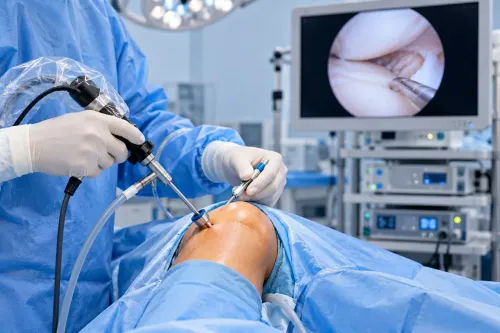
| Knee injury | Examination and sometimes imaging; rehabilitation may suit stable injuries, while recurrent giving-way or a combined ligament injury needs specialist discussion. Knee injury treatment sanghvi does not automatically mean surgery. | The knee locks, gives way, or swells greatly within hours. |
| Shoulder dislocation | Immediate reduction by a clinician, followed by immobilisation and rehabilitation. | Never force it back yourself; deformity, numbness, or a cold hand is an emergency. |
| Finger or wrist injury | Splinting and X-ray assessment can protect alignment and grip. | There is deformity, rotation, severe swelling, or inability to move. |
| Rib impact | Relative rest, regular deep breaths, and pain control prevent shallow breathing. | Breathing difficulty, coughing blood, or worsening chest pain develops. |
| Head impact | Stop play and obtain concussion assessment; do not return while symptomatic. | Repeated vomiting, worsening headache, confusion, seizure, or unusual drowsiness requires emergency care. |
From assessment to a safe return to cricket
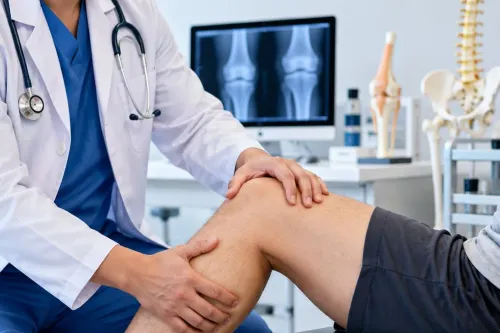
A useful local assessment should do more than locate the painful spot. The clinician should review how the injury happened, inspect swelling and bruising, watch your gait, test joint stability and range of motion, and compare strength with the uninjured side.
Ask these questions during the appointment:
- What is the working diagnosis, and which finding would change it?
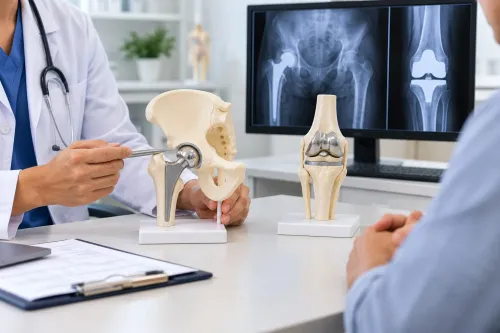
- Do I need an X-ray, ultrasound, or MRI, and what will the result change?
- What can I do this week, and when should I return for review?
- Which exercises and return-to-play tests must I pass?
At a sports injury clinic in Pune, judge the pathway rather than the availability of injections or scans. Dr Amit Laturkar Orthopedic in Aundh | 08048035468 is one local option where you can use these questions to assess whether the plan includes examination, staged rehabilitation, and review if recovery stalls.
Progressive loading is safer than simply waiting when pain and swelling are settling, movement is improving, and the injured area tolerates easy activity without a limp or compensation. Begin with pain-limited motion, then light resistance, balance, running, changing direction, jumping, and cricket-specific drills.
Walking comfortably does not clear a hamstring or calf strain for sprinting. Return only when strength, balance, range of motion, and drills are near normal without symptom recurrence; do not use painkillers to mask failure.
Related service
Sports Injury Management in Pune Sports Injury Treatment in Aundh, Sanghvi, Pune Dr. Amit Mohan Laturkar is the Leading Sports Injury Management Specialist in Aundh, Sanghvi and Pune. View service → |
Frequently asked questions
When is rest enough after a cricket injury?
Relative rest suits a mild strain or sprain when pain is improving, the joint remains stable, and you can move without worsening symptoms. Stop cricket, protect the area, and resume gentle pain-limited movement as it settles.
What should I do during the first 24 to 48 hours?
Stop play, protect the injured area, use comfortable compression when appropriate, elevate a swollen limb, and avoid painful activity. Do not keep the area completely still for longer than necessary.
When should I see a cricket injury doctor in Aundh?
Arrange an assessment for severe or increasing pain, marked swelling, deformity, joint instability, numbness, locking, or inability to bear weight. Seek urgent care for an open injury or suspected fracture.
What is needed before returning to cricket?
You should regain pain-free movement, near-normal strength, balance, and sport-specific ability. Progress from walking and basic drills to running, cutting, jumping, bowling, batting, or fielding before competitive play.
Keywords